

January, a time for reflection on the year that has passed and setting intentions for what is to come. 2022 was an unusual year, and a busy one. Many of us found our feet and attempted to nurture our businesses back to their pre-pandemic health, with one or two obstacles to maneuver along the way. A very busy event business and a growing number of consultancy projects meant it was hardly a year to kick back and relax. And if you’re anything like me, then there is never such a year. But as I finalised recording the audiobook of my biography, Taylor Made, I reflected on my dedication to work – and the cost to my family, relationships, and well-being. That’s why in 2023 my goal is to find something better – and closer to finding a work-life balance.
FINDING A WORK LIFE BALANCE
It sounds like such a simple thing, but in reality, finding a work-life balance can be something elusive, out of reach. Particularly for self-confessed workaholics such as myself. Blessed and cursed with a mind that will never switch off. So, in an attempt to inspire myself and others, this blog is dedicated to uncovering just what finding that elusive work-life balance can mean for both a business and personal life. It also examines some ideas on how to achieve the perfect work-life balance.

WHY WORK LIFE BALANCE IS IMPORTANT
Firstly, it’s useful to examine the question of why work-life balance is important in order to fully understand how it can positively impact your life. It has far-reaching consequences beyond just ‘even up the scales’. With proper work-life balance, you can fully enjoy the fruits of your labour.
Less stress, better mental health and increased levels of happiness are all reported benefits of a good work-life balance.
Arguably, the most important thing about finding a good work-life balance is time. Time to do the things you love. To spend with those most important to you. If you can disconnect from work and really allow yourself to enjoy that time, it’s a priceless gift.
What most people don’t consider is that finding work-life balance can actually have benefits for your career too. It can most certainly make you more productive at work. A well-rested mind and body are ready to tackle to-do lists with renewed vigor. And it can boost creativity. More on that later.
As an employer, it matters too. Reducing stress-related illness and the risk of burnout. Inspiring an enthusiastic, loyal, and productive workforce. Encouraging staff to find work-life balance can boost productivity and cut the cost of absenteeism to a business.
WORK-LIFE BALANCE AND THE CREATIVE BRAIN
Anyone who runs their own business knows that it’s incredibly hard to clock off at the end of the business day. And, if you’re like me, you’re running a business where the main currency is ideas; it can be even more challenging to leave your business at the office. Worse still, if you have a mind like mine, which finds inspiration in the most mundane of places, switching off for the evening is nigh on impossible.
That’s the thing about the creative brain. Only when you take your focus off the task at hand do ideas begin to flow. A change of scenery can dramatically affect the creative brain. Whether that’s in bed at 2 a.m. While relaxing in a bubble bath. Pounding out the miles on the treadmill. The ideas come, ready or not.
One gives rise to the other.
So how do you find a work-life balance when the creative side of your brain goes into overdrive every time you ‘switch off ’?
All you really need to do is be prepared for those ideas to come and find a way to put a pin in them until you’re ready to do something about them. Notebooks help. I have them all over the house and office. Voice notes are even better. A way to offload your internal monologue until you can revisit it in a more productive setting.
Delaying getting started on a project or idea takes practice. I’ve lost count of the times I’ve sat at my laptop in the early hours of the morning researching and firing out emails because I just can’t wait to action a great idea. Work in progress, as they say.
However, there is something to be said for working when your brain is at its most productive. If that’s past midnight for you, then perhaps you should reconfigure your workday accordingly. Work at night, but make sure you take back those hours during the official workday. A terrific way to achieve your own version of work-life balance. Daytime hours are especially precious for those with young families. That’s all dependent on having an understanding boss who appreciates the benefits of flexible working, of course.

IDEAS TO HELP YOU FIND WORK LIFE BALANCE
As I’ve mentioned, I’m continually striving to achieve work-life balance. So how do we achieve this seemingly unreachable utopia? Here are some ideas that I may try to put into practice this year, as with everything, it’s about trial and error. Making small changes and finding what works for you.
FORM A ROUTINE
It could be that your last task of the day is always to write a to-do list for the next morning – a fabulous way of getting everything out of your head and into a format that’s easy to tackle on the morrow. You may wash your cups and tidy your desk area. Or you could clear out your inbox. All of these are brilliant signals to your brain that it’s the end of the day and time for the shift to ‘downtime.’
SET BOUNDARIES
Post-pandemic, many intended to enjoy more work-from-home days and flexible hours, but the reality of home being the office is that it’s even harder to switch off.
If you work from home, you really do need to treat the workday like you are in the office. It’s easy for boundaries to blur, but checking emails while trying to cook dinner and do the washing isn’t productive. In that scenario, BOTH tasks will likely take longer.
Focus on one or the other – have a dedicated time and space for work and the same for household chores and family time. If you have a physical office space, it can help you literally and metaphorically shut the door on work and ease the transition.
Even if you don’t work from home (I am a fan of the office environment), boundaries are about not always being available. Some out-of-hours work is expected in certain roles, but being always on email or WhatsApp, no matter the time of day, can be detrimental to your work-life balance.
USE THE COMMUTE
One remarkable thing about travelling to and from an office is that it allows you transition time to leave the working day behind. Walking, cycling, or running to and from work is a fantastic way to forget the highs and lows of the workday. But even a train or bus journey can have benefits. It gives you time to leave work behind. One tip is to read a book or listen to a podcast or some music that makes you happy – a welcome distraction to working on the move.
GO STRAIGHT TO EXERCISE
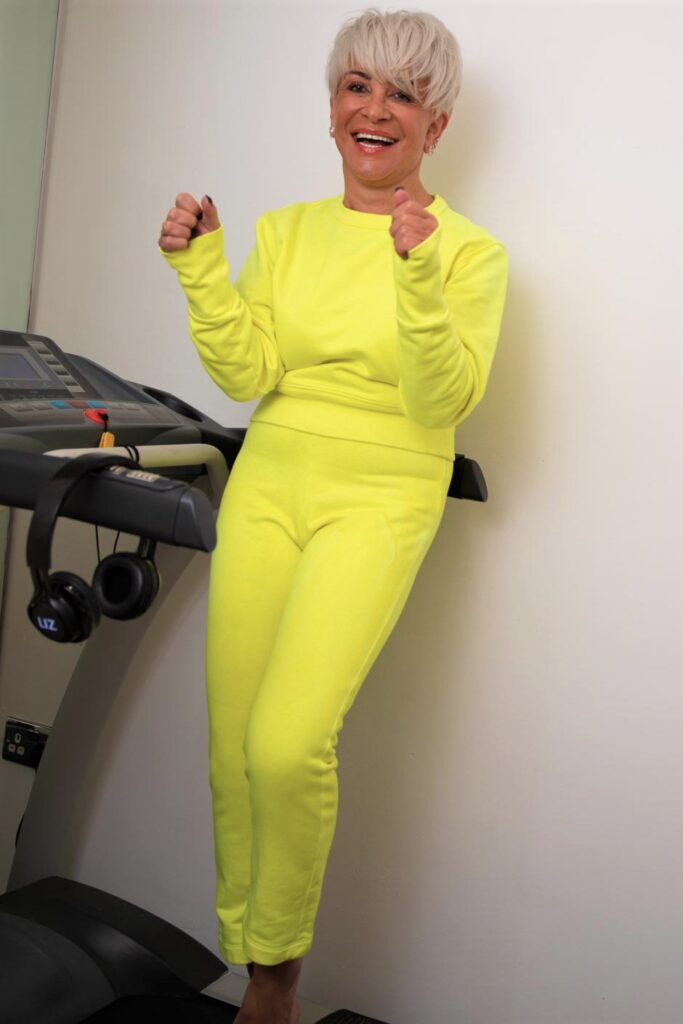
Personally, I like to start the workday with exercise, but there is merit in working out after work. Use those endorphins to shed the work stress and leave your workday behind.
WORK TO YOUR CYCLE
Don’t strive for schedule perfection. Instead, work toward a reasonable, realistic schedule. Some days, work may take priority; other days, it might be better to focus your time and energy on hobbies or time with loved ones. Balance is achieved over weeks, months, and years. Not each day.
DO A JOB YOU LOVE
There’s an argument to say that this could make you work even more hours; however, if you truly have a passion for what you do, then work feels less like a chore and more like a favourite pastime. And work-life balance is as much about how you feel as it is about time dedicated to certain tasks.
HOW DO I FIND THE BALANCE?
In an ‘always on’ society, work-life balance is something most of us need to get better at. Yes, I work hard, and I play hard – it comes with the territory. As I have mentioned, I’m striving to find balance in my life. But there are certain things I do currently that help me to restore equilibrium. Exercise is daily; it’s my ‘me time’ and my way to manage stress and burnout.
I see and speak with my daughters and grandchildren daily – they’re my reason for working so hard, my world. I even work alongside one of them now.

Each year I dedicate a week to attending a yoga retreat. I switch everything off – phone, laptop, emails, messages. And I head to Portugal or Turkey to completely detox. Physically. Mentally. Digitally. I return a new person. Re-energised, revitalised, and full of ideas for new ways of doing things.
READ
The 4-Hour Work Week by Time Ferris is a book for entrepreneurs. While that is certainly one group that can benefit, it also packs a lot of great, actionable information for anyone hoping to improve their work-life balance. The central premise of the book is pretty simple: “The perfect job is the one that takes the least time.” Quite ‘American’ in the jargon, but still, I thought there were some great tips we could all use, with strategies for getting more done in less time and the goal of spending more time doing the things you love.
